
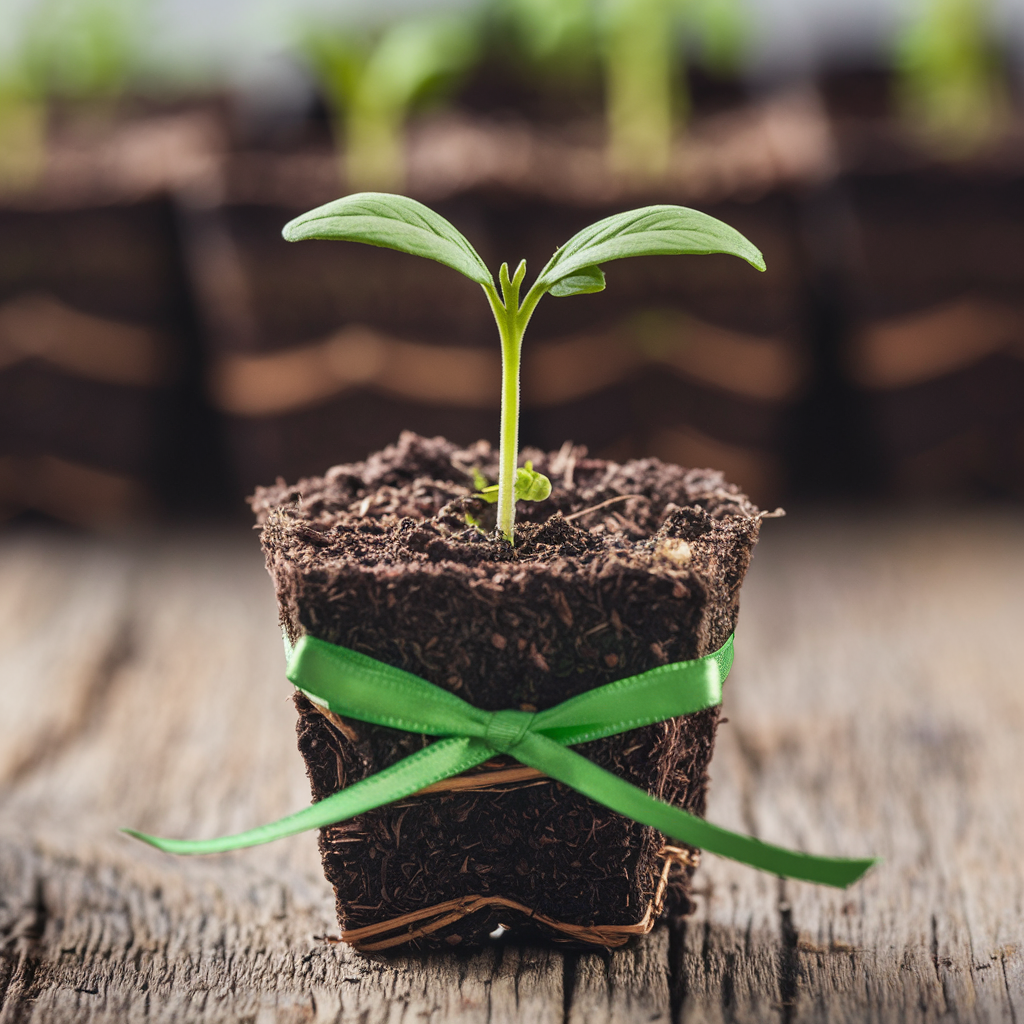
A silly nursery rhyme asked Contrary Mary, how her garden grew, and she pointed to some nonsense elements.
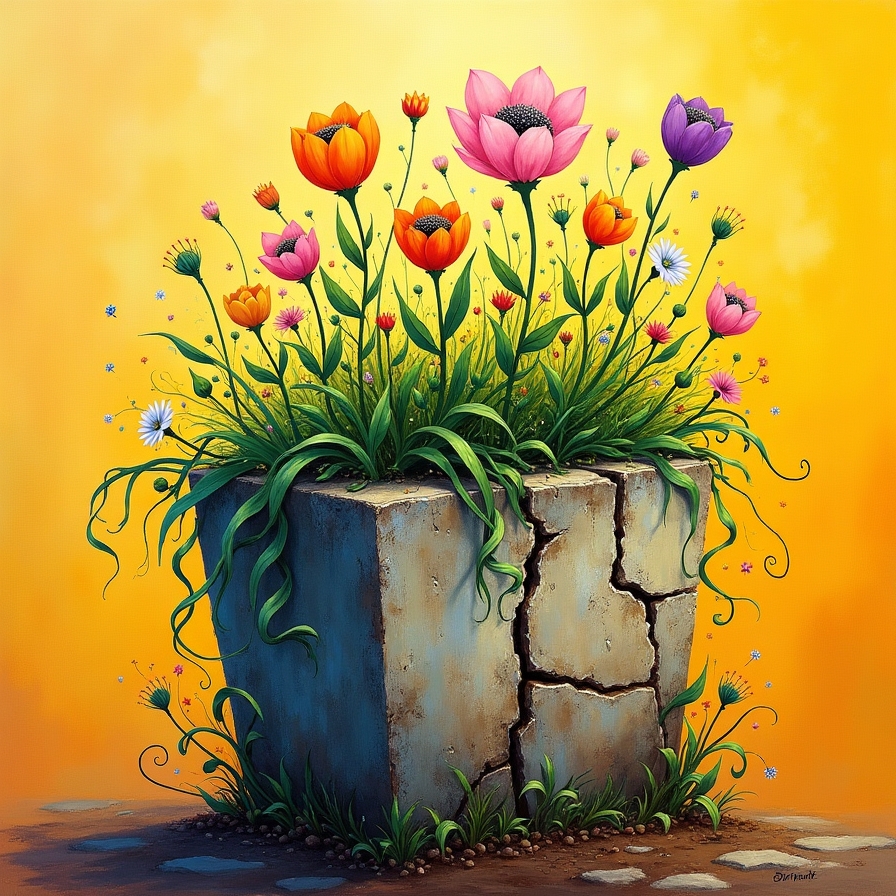
Unsurprisingly, Contrary Mary gardens are not all the rage today. Psalm 1, in contrast, showed that a blessed man who delights in God’s Law flourishes like a tree planted by streams of water. That is to say, like the tree, the blessed man grows because of where he’s located and how deeply he’s rooted. The Body of Christ is like the blessed man in Psalm 1. This precious display of the wisdom of God is designed to grow, spread, thrive and flourish. In line with Jesus’ will for His Church and what to expect when they gather, Jesus has a vision of how that Body grows … and it has nothing to do with the Contrary Mary garden approach.
Imagine a single dandelion releasing its seeds into the wind. Each tiny parachute lands in the soil, takes root, and eventually produces a new plant that repeats the process. This isn’t a rigid, top-down strategy; it’s a natural multiplication built into the DNA of creation. Jesus envisioned His church operating similarly: a living, breathing movement that spreads organically through relationships, transforms communities, and reflects His Kingdom to the world. Let’s explore how this happens and why every believer, no matter how new to faith, plays a vital role.
God’s Intention for Growth
From the beginning, God designed humanity to multiply and steward His goodness. After creating Adam and Eve, He blessed them and said, “Be fruitful and increase in number; fill the earth” (Genesis 1:28). This wasn’t just about population growth – it was about spreading His image and dominion. Later, God promised Abraham, “All peoples on earth will be blessed through you” (Genesis 12:3), foreshadowing a family that would expand to include every nation.
God’s heart for multiplication continued with Israel. He called them to be “a light for the Gentiles, that [His] salvation may reach to the ends of the earth” (Isaiah 49:6). Though they often faltered, this vision pointed forward to a day when God’s people would fulfil their purpose: carrying His love beyond borders.
Fast-forward to Jesus, who transformed multiplication from a national project into a global, relational mission. Before ascending to heaven, He told His followers, “Go and make disciples of all nations... teaching them to obey everything I have commanded you” (Matthew 28:19–20). This wasn’t a suggestion for religious professionals but a mandate for every believer. Just as seeds multiply by design, disciples were to make disciples, naturally and persistently.
Jesus’ Method for Growth
Jesus’ model revolves around spiritual kinship. When He said, “Whoever does God’s will is my brother and sister and mother” (Mark 3:35), He redefined community as a family united by obedience to Him. Jesus sees His Body multiply like healthy families: parents raise children who eventually establish their own households, yet remain connected through shared values and love. The early church exemplified this, meeting in homes, sharing meals, and growing as “the Lord added to their number daily those who were being saved” (Acts 2:47)
Paul explains that Christ gives gifts to the church “to equip His people for works of service, so that the body of Christ may be built up” (Ephesians 4:12). There are no passive attendees, only active participants. A fisherman like Peter could pray for the sick (Acts 9:40), a tentmaker like Paul could plant churches (Acts 16:11-15), and a formerly demon-possessed man could evangelise his entire town (Mark 5:19-20).
Jesus focused on people. He spent three years investing in twelve disciples, teaching them to pray, serve, and teach others. He compared God’s Kingdom to “a mustard seed, which is the smallest of all seeds... [but] grows into the largest of garden plants” (Matthew 13:31–32). Small, faithful acts, like regular conversations, praying with a neighbour, and modelling forgiveness, create ripple effects that stimulate growth.
From this basis, the following emerges as to practical steps in which the Body grows:
- Pray for open doors: Paul requested prayer "that God may open a door for our message" (Colossians 4:3). Multiplication begins with seeking God's guidance for where He is already working.
- Equip everyone to serve: In Ephesians 4:11-12, Paul explains that gifts exist "to equip his people for works of service." Everyone is trained to study Scripture, pray for others, share their faith, and disciple others.
- Release and Support: Like the Antioch church that "placed their hands on them and sent them off" (Acts 13:3), recognise when God is calling members to start new gatherings elsewhere.
- Stay Connected in Love: New expressions remain connected to the wider body through relationships, not hierarchical structures. "From him the whole body... grows and builds itself up in love" (Ephesians 4:16).
He Will Build His Church
The reference to Contrary Mary may come across as flippant, but there is actually a great temptation for people involved in the church to veer away from Jesus's will for how the Body grows. That divergence has led to some expressions of the church that resemble more of the Contrary Mary methods rather than Jesus’ will. Contemplating how Jesus builds His church should give us pause for thought to see who we’re following. It should also give cause for praise at the reality that what Jesus starts, He will complete in preparation for the glorious marriage supper of the Lamb.
Even so, Lord Jesus, come.
For His Name’s Sake
C. L. J. Dryden
Shalom
Next Steps
Reflect: Before reading this, how did you think the Body of Christ grows? Has that changed because of this reading?
Pray: Dear God, show us one person we can encourage, teach, or serve this week. Help us to have the courage to share how You are working in us.
Act: This week, take one step to invest in someone spiritually; text a Scripture, invite them for a walk, or ask, “How can I pray for you?” Then, challenge them to do the same for another.