

“It’s time to go to church.”
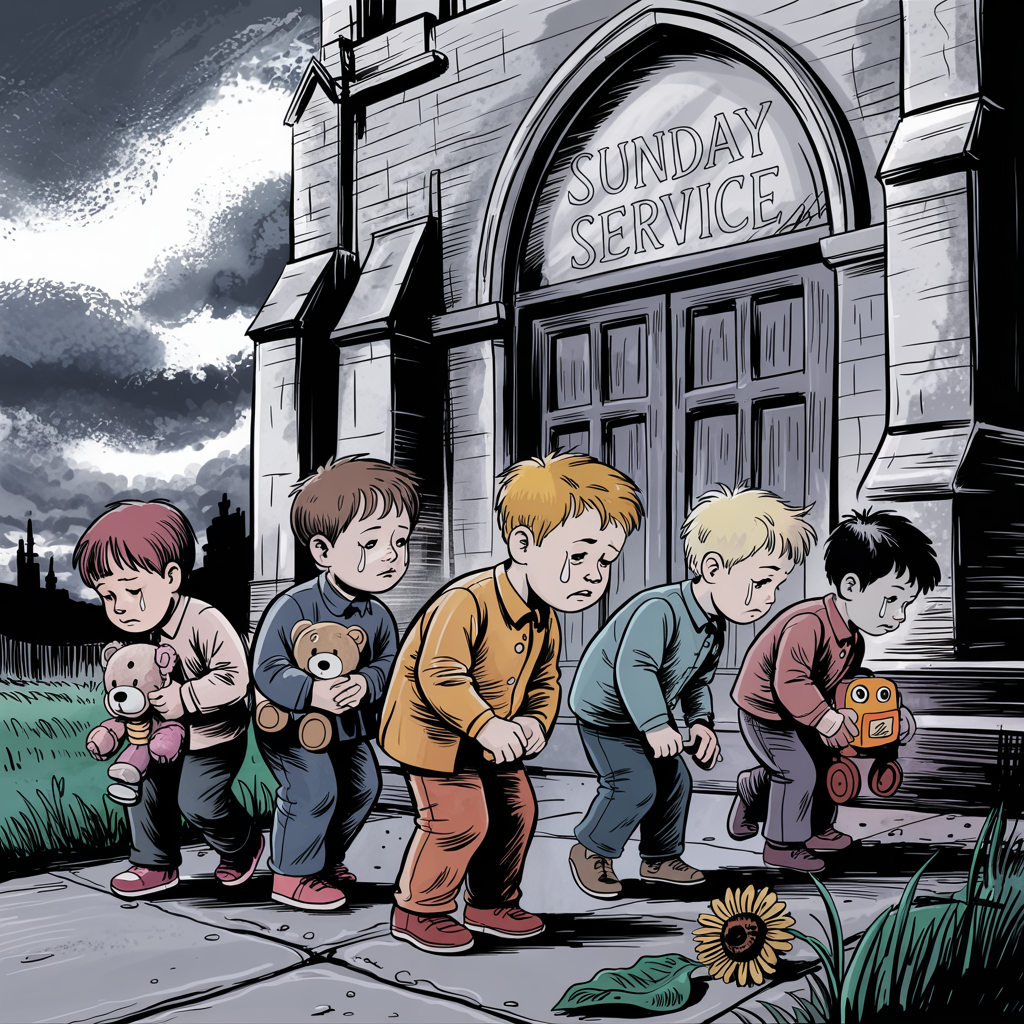
As a child in a household overseen by two loving parents committed to God, this was the signal for me. That signal said that whatever I was doing before had to stop. It said that I had to get ready to put on an outfit and take on the necessary character to endure a set time in a set place with other adults who would conduct a series of activities in all due sincerity and seriousness. That signal established the end of one world to enter a totally different one, but only for a brief time and then I could return to the world I was used to.
Church was a place, a series of activities, and a persona required to engage in the place. Often it appeared so separate from the world I lived in outside that it was almost as though it actively encouraged living two lives – one for the religious/spiritual and one for outside, the secular, as described. Was that what Jesus wanted to happen to those who became His followers? Was his idea of church about entering a separate world, observing specific actions carried out by others and adhering to a life not connected with everyday living?
Have you ever noticed how a garden grows? Unlike a building constructed by human hands with rigid blueprints, a garden flourishes through an organic process—each plant responding to sunlight, water, and nutrients in its own time and way. This living, breathing ecosystem offers a beautiful picture of how Jesus intended His church to function. While many of us are familiar with programmatic, building-centred expressions of church, there remains an invitation to explore what Jesus expected from expressions of His community.
Insights into the Invitation
This invitation emphasises simplicity, authenticity, and intimate fellowship. Rather than focusing on buildings, programs, or hierarchical structures, this invitation prioritises relationships and the active participation of every believer. The setting creates space for each member to contribute and grow.
This approach isn't new. In Acts 2:46-47, we read: "Every day they continued to meet together in the temple courts. They broke bread in their homes and ate together with glad and sincere hearts, praising God and enjoying the favour of all the people." The early church thrived without buildings, budgets, or professional clergy—simply believers gathering to worship Jesus and encourage one another.
Jesus referred to sacred space when He declared: "Destroy this temple, and I will raise it again in three days" (John 2:19). He wasn't referring to Herod's magnificent building but to His own body—establishing that God's presence would no longer dwell in temples made by human hands.
Peter further develops this concept, writing: "You also, like living stones, are being built into a spiritual house" (1 Peter 2:5). The church isn't a physical building but a living temple composed of people indwelt by God's Spirit.
Function in the Invitation
From this basis, the following emerges as to what happens as saints gather under the lordship of Jesus Christ:
- Shared Leadership: While roles exist for administration, every member is encouraged to serve.
- Biblical Leadership: Following the New Testament pattern of elders who provide spiritual guidance while equipping all members for ministry (Ephesians 4:11-13)
- Participatory Worship: Rather than performance-oriented services, all contribute through prayer, teaching, testimony, singing, or Scripture reading.
- Breaking Bread Together: Following the example of Acts 2:42, meals are the centre of the gathering, combining fellowship with communion.
- Bible Discovery: Instead of expert-delivered sermons, the practice facilitates the discovery of Scripture where everyone contributes insights.
- Mutual Care: Members actively support one another spiritually, emotionally, and practically.
- Outward Focus: A missional perspective drives the gathering, reproducing themselves through relationship-based evangelism.
Godly Benefits from Following Jesus’ Invitation
- Accessibility: Without buildings or budgets being essential, gatherings can form anywhere people gather.
- Reproducibility: New communities can emerge naturally as disciples make disciples.
- Intimacy: Smaller gatherings foster deeper relationships and accountability.
- Resilience: Less dependent on complex infrastructure, allowing opportunity to thrive under persecution and economic challenges as the group develops dependence on the leadership of the Holy Spirit.
His Church is Who We Are, Now Something to Go To
Rather than an invitation to live in a separate world, Jesus’ invitation to those who gather in His name is to practice how his world – His Kingdom influences and affects all of our world. That happens as we gather in His name and bring to Him, as His family, all of life. And as we submit it together to the light of His wisdom and care, we’re equipped to be more like Him and infused with the desire to do His will in every aspect of life. And we appreciate that His Body is not an event, or a building, or a set series of activities that are distant from us. We appreciate the invitation He gives us to operate as His Body every day of our lives, and when we gather to seamlessly intertwine all of life under His rule as we grow by His grace. For Jesus’ invitation is true – all the time, we are His church.
For His Name’s Sake
C. L. J. Dryden
Shalom
Next Steps
Reflect: How aligned is your current experience of church with the New Testament patterns we've explored? What elements of Jesus’ invitation resonate most deeply with your understanding of His vision for His people?
Pray: Dear God, show us how You want us to participate in Your body. How do You want us to experience deeper community and activate your spiritual gifts more fully?
Act: This week, what one step could you take toward a more participatory, relational expression of church?