

And everyone who thus hopes in him purifies himself as he is pure. (1 John 3:3 ESVUK)
The thief comes only to steal and kill and destroy. I came that they may have life and have it abundantly. (John 10:10)

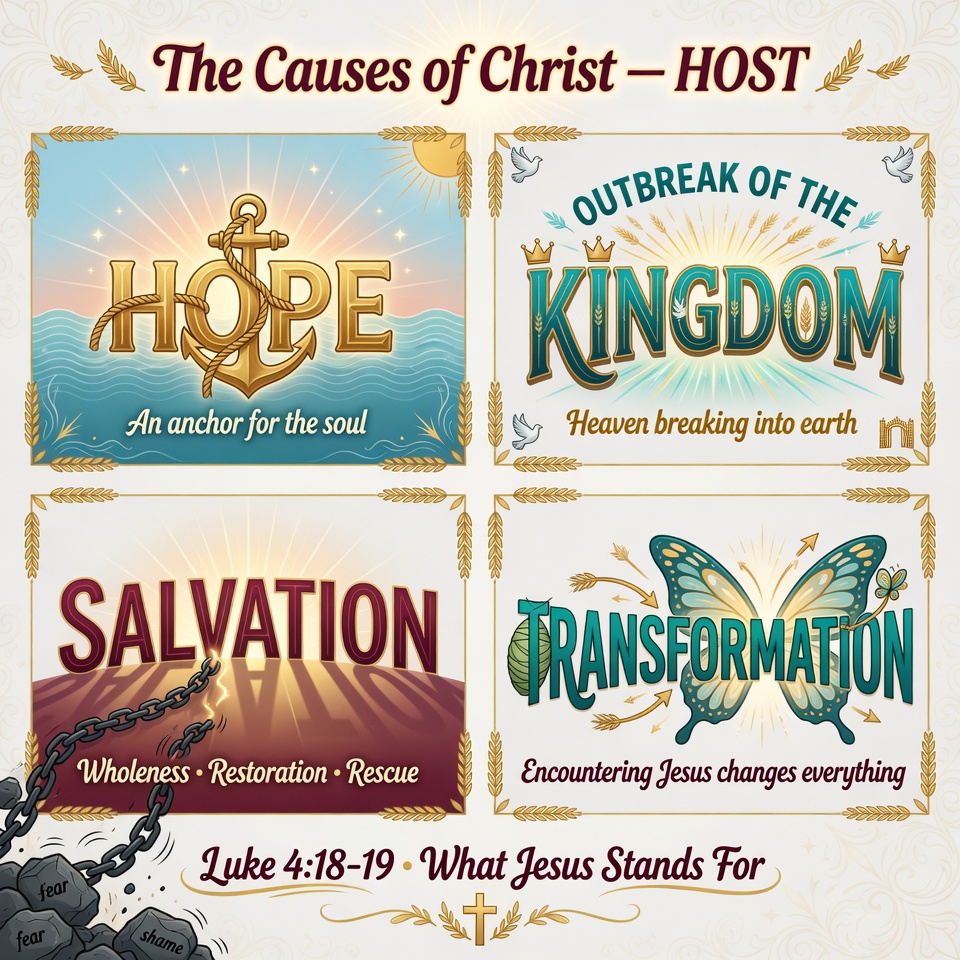
Faith connects us with the timeless God who operates in time. That faith motivates the heart of worship, the desire to be pleasing to the one who creates us and restores us when we stray from His presence. That worship propels us to serve others with wisdom and strength He grants us to reflect Him. This is being done with a very different kind of hope than what we are surrounded with.
What distinguishes the kind of hope rooted in Christ is that this kind of hope is about a confident expectation. It’s not the kind of hope that you have to employ a contingency plan. It’s not the kind of wishful thinking that gets you crossing your fingers in case it happens, as if the possibility is uncertain. This reflects the world’s kind of hope. That’s the kind of hope that sees people voting for people into positions of power with no certainty that promises will be kept and change happens, but on the chance that it could happen. This is the kind of hope that prompts people to start new jobs on the chance that it might prove to be one that suits both their financial demands and lifestyle aspirations. There’s nothing certain about these things, but there’s the aspect of taking a plunge with the chance of a positive outcome.
These expressions of worldly hope shape people’s approach to life and work for some, since they have settled for this kind of hope. Indeed, the nature of life, as depicted as something always challenging and onerous, dampens people’s hopes and can force them to look to be more “realistic” in the bid to avoid the “hope that kills you”.
Those who encounter Jesus come across something startlingly different about His kind of hope. Peter informs us that our heavenly Father causes us to be born again into a living hope – all based on Jesus Christ (1 Peter 1:3-5). This is because those who encounter Jesus are invited to live His kind of life. One of service now in expectation of glory later. One of carrying our cross now in expectation of exchanging it for a crown later. One of diligently fulfilling God’s call today in expectation for Him to return the wonderful verdict that we have been good and faithful servants who inherit wondrous eternal realities. Essentially, what we have to look forward to later has a massive bearing on what we do now. This is because what we do now reflects either that confident assurance that God has something even greater prepared ahead, or it reflects the world’s less aspirational and far less tenuous wishes for something better than what they currently endure.
The glorious hope we have in Jesus is one that is regularly seen throughout Scripture, and it challenges us to live with that degree of confident expectation. It’s evident when Hebrews talks about running the race, looking to Jesus, who can assure us of finishing the race well. It’s apparent in what John says in 1 John 3:3. We have this awe-inspiring vision of seeing Jesus as He is and linking that with the knowledge that we shall be like Him – this current human existence being exchanged for something far more glorious. And that knowledge, that kind of hope, influences our current life. We don’t have to be captured by the cynicism of some, because what we have to look forward to helps us live in anticipation of that. There are brighter days for believers, which is a great reason to let their lights shine before all of men now so that others too might see and be intrigued to find out more about the hope that gives us life, rather than being the deluded speculating that informs the world’s idea of hope.
This dynamic hope that marks out believers is something I experienced firsthand when living alongside other brothers in Christ. At first, the contact was constant, but over time, other responsibilities meant we would be in touch less frequently. What marked out the relationships, though, was our reference back to how we wanted our lives to be shaped by the hope we had in Jesus. A hope for a better life, a glorious world made new and eternity spent in the company of the Creator of the universe. That kind of hope would challenge us to examine the level of consistency we are living in as we pursue purity, just as He is pure. That wasn’t a legalistic whipping to look for any slacking as a judgment of character. This was about encouraging one another to see the goal that awaited us and pursue it fervently. Those relationships still mean a lot to me, as they shape my idea of hope and align it with what God says about hope, showing that it is not a passive affair, but an active and dynamic one.
We do not have wishful thinking. We have an assurance more sure than anything. That assurance is rock solid because it is based on the faithful One who does not change. As the faithful One, He has shown time and time again to be trustworthy and true to His word. He has shown this in past actions, and He highlights this in present encounters. This blessed assurance then gives us even greater confidence to apply a lively, influential hope to every aspect of our lives. It is life in this wonderful, vibrant hope that distinguishes us from others and is a great reason to invite others to explore this hope for themselves.
For His Name’s Sake
C. L. J. Dryden
Shalom
Next Steps
Reflect: How does hope make a person’s outlook on life different? How does hope shape your outlook?
Pray: Father, thank you for the hope you give us. Hope of what is set to happen so that what we have is not wishful thinking but a confident assurance that what you said you will do will happen. As we tap into this reality in the reality of Jesus, help us to be shaped in the present by the expectation of the glorious future.
Act: Connect with a friend in Christ and mark out three key ways your hope in Jesus for the future will shape you in the present. Note these as tasks you’ll accomplish in the coming week and open yourself to being held accountable on how you complete those tasks this week.